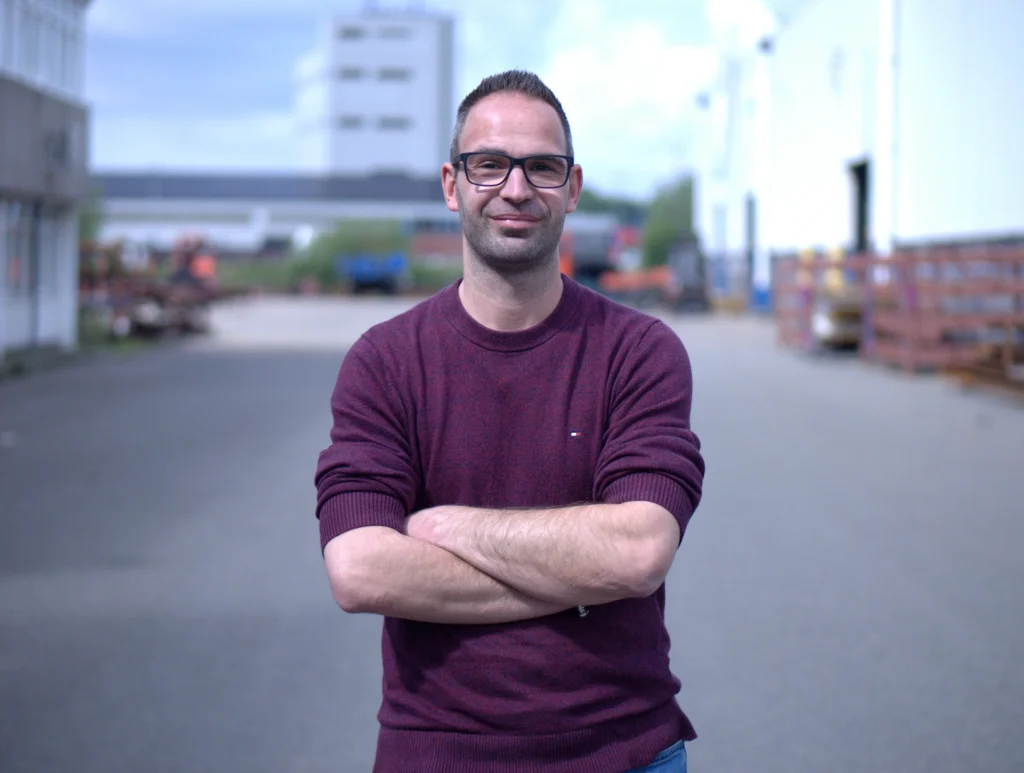

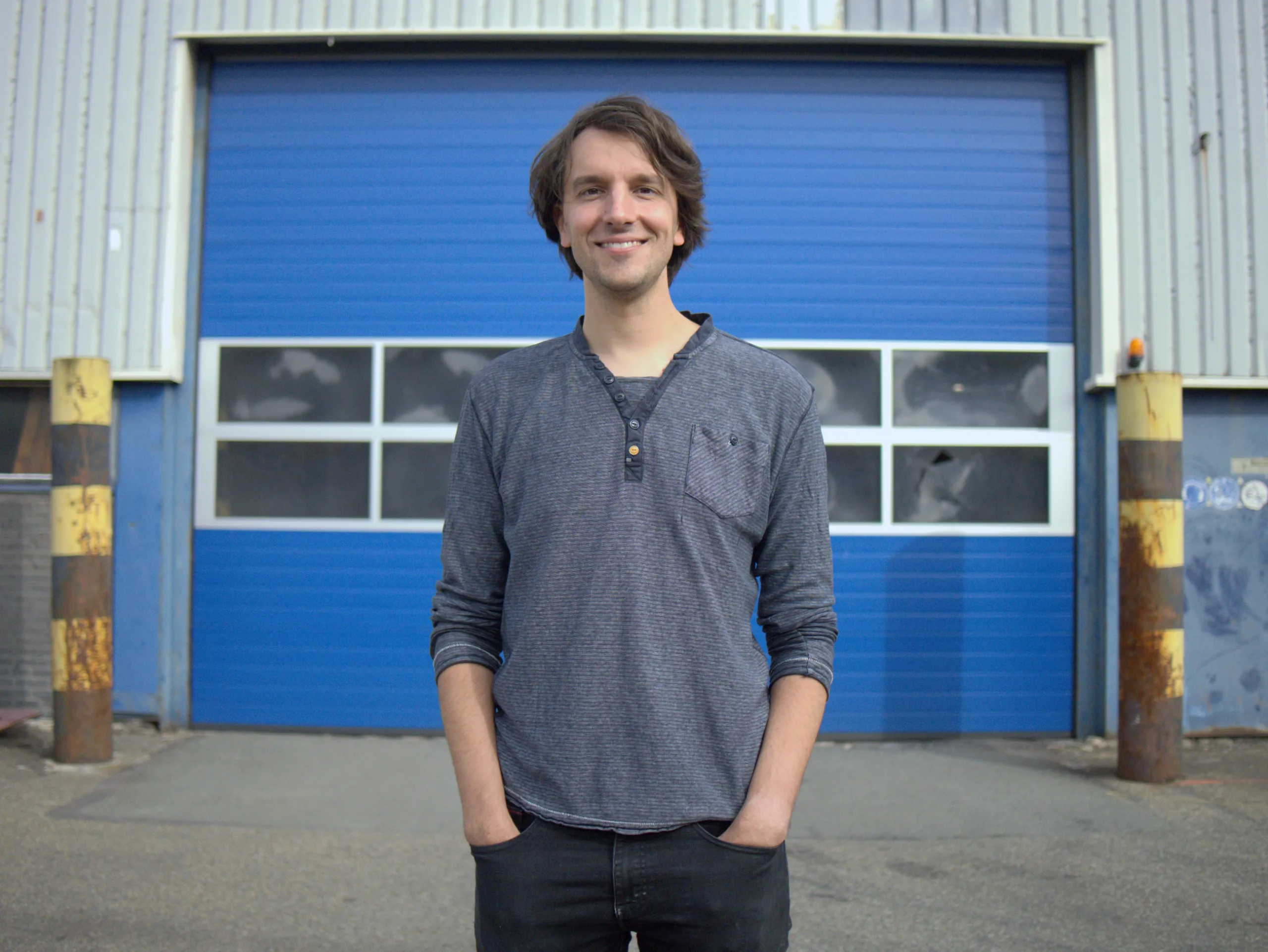
Harry studied aerospace engineering but couldn't find the kind of work he was looking for in that field, so he found his way into the maritime sector. It proved a good fit: ten years later, he is still at DEKC, his first employer. His work as a designer focuses on the early stages of a project: talking to owners and end users, giving shape to what starts as an idea and bringing it all together in a single design.
Words by DEKC editorial
“You predict the future by designing something now that, in two years' time, will do exactly what you intended.”
Harry has worked at DEKC for over ten years, and he finds it hard to imagine doing anything else. His love of engineering goes back a long way. "As a child, it was always planes, roller coasters, that sort of thing. Things that were big, that went fast, that's what drew me in." It was never about flying itself. The appeal lay in the machines and the engineering.
Big machines
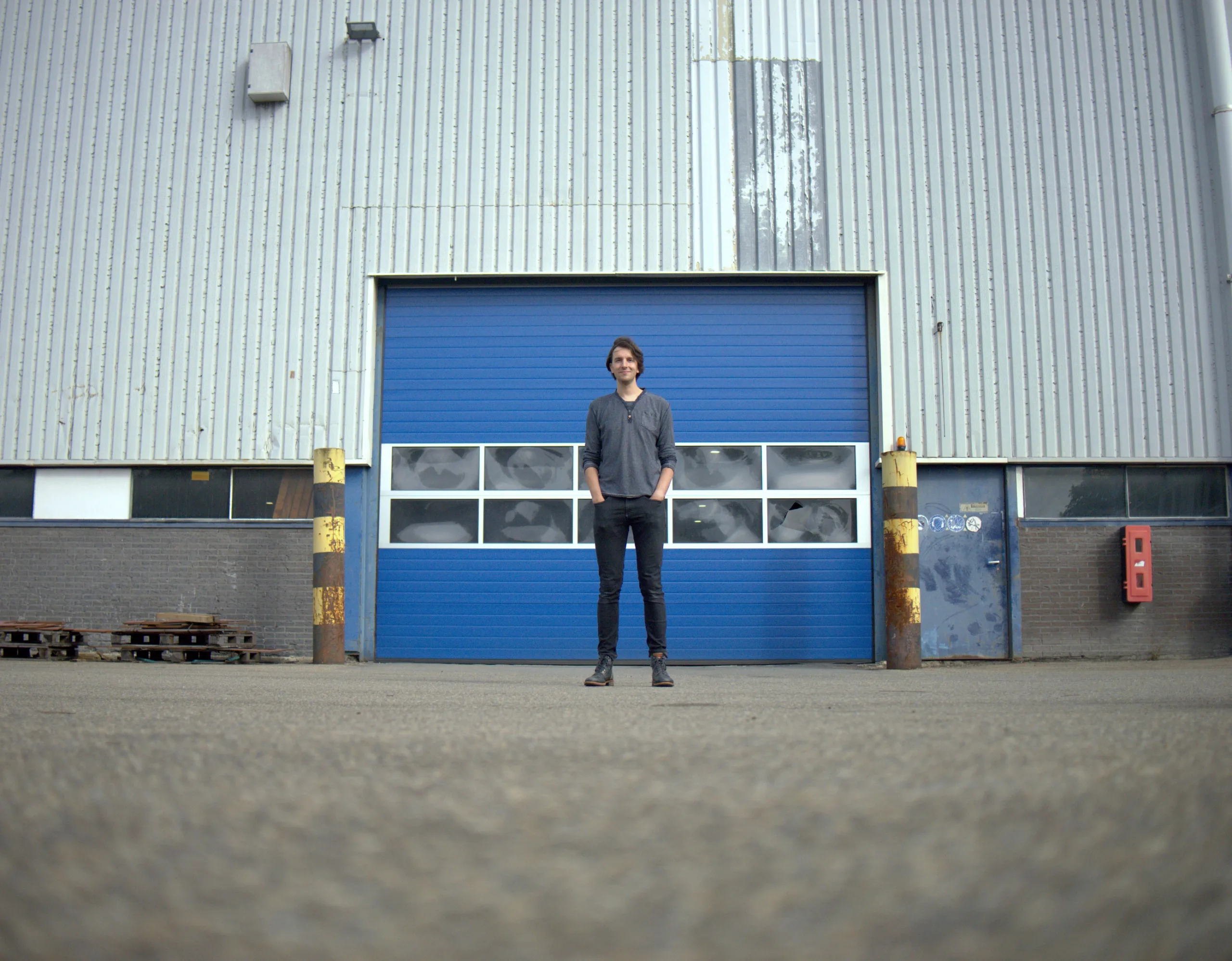
In the maritime world, there are people who go sailing; in aviation, there were people who went gliding. For Harry, that's not what it's about. "There's something about big machines that fascinates almost everyone, I think. How does something work, how does it all fit together? In a science museum, I head for the machines first. Part of it is simply that we can build something like that at all. That we can make it, that it works, that you can do really big things with it."
Predicting the future
He studied aeronautical engineering and specialised in space engineering for his master's degree. What appealed to him was the tangible side: during his studies, he discovered how much he enjoyed designing machines.
“You do the calculations, you produce the drawings, and in a sense, you're predicting the future. The choices you make now determine what the thing will do when it's actually built in two years' time.
His specialism, space engineering, called for an even longer view, with projects looking fifteen or twenty years ahead. "Being able to look that far ahead, and then having exactly what you predicted happen, that really grabbed me. And I've always had a thing for numbers, which helps."
The early stages of a project
Harry's work now focuses largely on the early stages of a project. He talks to owners and end users, giving shape to something that may still be little more than an idea. It doesn't always start with a commission. DEKC has also developed ideas of its own that can serve as concepts for client projects. More often, though, it is the client who comes to them with a request.
"The client usually has a pretty good idea of what they want. They have a sense of where it needs to go. Our job is to get something down on paper that meets all the requirements, that ticks every box."
A client might, for example, need a relatively small ship that still has to carry substantial cranes for lifting cargo aboard. Harry takes that need as his starting point and develops the design. "In a sense, you do that together with the client. That's the question: how do I give the person who's hired us the best possible product, something that really fits what they need?"
One drawing, and the idea behind it
Every project starts with a general arrangement drawing of the ship, with the main elements already in place, the parts you know will need to be there. Behind it are calculations, carried out across several software packages, to check whether everything the client and designer have in mind can actually be built. "At the start of the design process, everything revolves around that one drawing, and ultimately it has to be right. Then you can scale up the project and bring in a team to work out the details."
But the drawing is more than just a drawing. "You're giving shape to the idea behind the ship, and that idea has to come across in the drawing."
That is why 3D models are increasingly being used, rather than relying on a flat drawing alone. "It's a fantastic communication tool. It's more accessible, and you can walk through it. Anyone can explore the model and think: I'd hit my head here, or my cargo would never fit through the hold here. You can literally see it in front of you."
For Harry, the model remains the basis of his work. When colleagues work out the structure in detail, he uses the model to see how it all fits together. "It's an even better way of predicting the future."
Why he stays
Ten years at one company. Harry puts that down largely to the company culture. When he joined, the older generation who had helped build the company in its early days were retiring, and a lot of younger people were coming in. He acknowledges that some of the experience walked out the door with them. But he really likes the culture that has developed. "There's a real sense of 'we' here. Everyone's on the same side. You don't get much of that internal competition between roles or departments. We take our work very seriously, but there's still room for a chat by the coffee machine. It's relaxed, informal. That's the best thing about working at DEKC. The trust, the variety and the culture."
“You really have ownership of your work. You get guidance where it's needed, but no one is constantly looking over your shoulder.
Related